
This is a homemade Perry’s-inspired copycat pork chop recipe.If you love steakhouse-style comfort food, Perry’s famous pork chop is a dish worth recreating at home. This easy guide shows how to make a thick, juicy chop with a rich caramelized crust and tender center. You’ll learn the key steps behind a restaurant-style result, from choosing the right cut to seasoning, smoking, searing, and glazing.
The method is designed for home cooks who want bold flavor without complicated techniques. Whether you’re planning a special dinner or simply craving a hearty pork dish, this copycat recipe brings that signature steakhouse feel to your kitchen. Get your thermometer ready because precision makes all the difference.
5 Delicious Secrets for Perry’s-Style Pork Chops
Smoked Pork Chops Built for Smoke, Sear & Tenderness
Five professional cooking moves for deeply seasoned pork, smoky flavor, a dark crust, and a juicy finish.
Five moves that shape the final chop
Brine the Pork Chops Before Cooking
A simple salt-and-sugar brine seasons the meat deeply and helps it stay juicy during smoking and searing.
Use Thick-Cut Chops for Best Results
Thick chops handle smoking and high-heat searing better than thin chops, helping you build a crust without overcooking the meat.
Smoke Low and Slow for Depth
Keep the smoking temperature moderate so the chops gradually absorb smoky flavor before moving to the high-heat finish.
Sear Hard for Color and Crust
Use a hot cast-iron skillet or grill to create a dark, caramelized exterior with rich texture and deeper flavor.
Rest Before Slicing
Let the pork chop rest for several minutes after cooking. This gives the juices time to redistribute and keeps the meat tender.
Build flavor gradually with brining and smoke, then use high heat for the crust. Resting completes the texture.
What Is Perry’s Famous Pork Chop?
The original Perry’s chop is famous for its unusual height and elaborate preparation. According to Perry’s Steakhouse, the signature version uses a secret seasoning blend before curing, roasting, slow smoking, caramelizing, and oven finishing. It also comes with herb-garlic butter.
At home, the easiest approach is to recreate those flavor layers rather than chase an exact secret recipe. A thick-cut pork chop gives you enough meat for smoking and searing without drying quickly. The combination creates a smoky flavor, savory seasoning, sweetness, and a glossy crust.
Ingredients for Perry’s Famous Pork Chop Recipe
Start with one very thick bone-in pork chop weighing roughly 2 to 2½ pounds. For the brine, use water, kosher salt, brown sugar, garlic, black pepper, bay leaf, and a few fresh herbs. This simple mixture helps season the meat more deeply than surface seasoning alone.
For the finishing stage, combine brown sugar, maple syrup, Dijon mustard, apple cider vinegar, garlic, paprika, black pepper, and a little butter. This becomes your pork chop glaze. You’ll also need oil for searing and softened herb-garlic butter for serving.
Thick Bone-In Pork Chop & Brine Checklist
| Ingredient | Suggested Amount | Purpose |
|---|---|---|
| Thick bone-in pork chop | 1, 2–2½ lb | Main protein |
| Water | 4 cups | Brine base |
| Kosher salt | ¼ cup | Brine seasoning |
| Brown sugar | ⅓ cup | Brine & glaze |
| Garlic | 4 cloves | Savory aroma |
| Black pepper | 1 tsp | Seasoning |
| Bay leaf | 1 | Aromatic lift |
| Fresh herbs | 2–3 sprigs | Herbal note |
| Maple syrup | 2 tbsp | Glaze base |
| Dijon mustard | 1 tbsp | Glaze balance |
| Apple cider vinegar | 1 tbsp | Acid brightness |
| Paprika | 1 tsp | Color & spice |
| Butter | 2 tbsp | Pan finish |
Equipment You’ll Need
A smoker gives this recipe its most convincing character. You’ll also want a large container for brining, paper towels, a heavy skillet, tongs, a baking sheet, and a reliable meat thermometer. Thick meat can look finished outside while remaining undercooked inside.
Don’t own a smoker? No problem. A charcoal grill with indirect heat can provide a similar effect. You can also use an oven-baked pork chop method followed by skillet searing. The equipment matters less than controlling heat carefully throughout the cooking method.
How to Make Perry’s Famous Pork Chop Step by Step
Begin by preparing the brine. Dissolve the salt and brown sugar in warm water. Add garlic, pepper, bay leaf, and herbs. Cool the mixture completely before adding the pork. Refrigerate the chop for about 8 hours. Longer brining can make the texture overly salty.
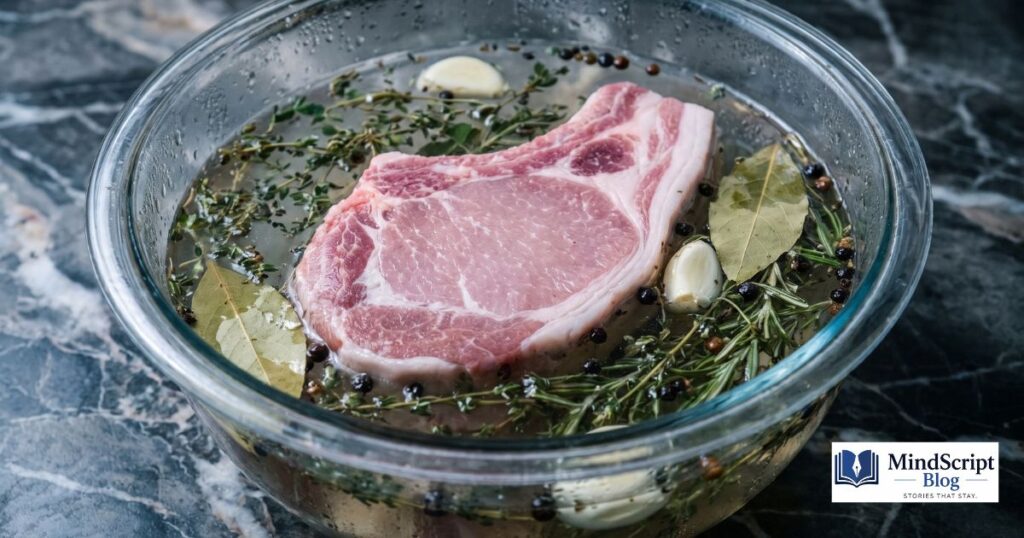
Remove the chop and pat it completely dry. This step sounds minor, yet it matters enormously. A dry surface browns far better. Apply your pork chop seasoning, then let the meat sit briefly while your smoker heats. Aim for gentle cooking rather than aggressive heat at this stage.

Set the smoker around 225°F to 250°F and use mild wood chips such as apple, cherry, or pecan. Smoke the pork gradually until the center approaches 125°F to 135°F. Cooking time varies greatly with thickness, so use temperature rather than the clock.
Next, heat a heavy skillet until very hot. Add a small amount of neutral oil. Sear the chop on several sides until a deep brown exterior develops. Brush on the glaze during the final minutes. Watch closely because sugar can scorch quickly.
Move the chop into a 375°F oven to finish gently. Continue cooking until the center reaches at least 145°F. The USDA recommends 145°F for pork steaks, chops, and roasts followed by at least three minutes of rest.
Remove the chop and let it rest before carving. This resting pork stage allows the temperature to stabilize and gives the meat time to retain more of its juices. Finally, slice along the bone and serve with herb-garlic butter.
Perry’s Pork Chop Cooking Temperature and Smoking Guide
Temperature is more reliable than a recipe timer. A massive chop can take much longer than a thinner one. Your smoker temperature, meat starting temperature, bone structure, and actual thickness all change the pork chop smoking time.
For safety, USDA guidance says intact pork chops should reach 145°F measured with a food thermometer and rest for at least three minutes. Insert the probe into the thickest part without touching the bone. That gives you a much more dependable reading.
Precision Heat & Internal Doneness Guide
| Cooking Stage | Approximate Temperature |
|---|---|
| Smoking environment | 225–250°F |
| Begin checking center | Around 120°F |
| Searing stage | Very high skillet heat |
| Oven finishing | Around 375°F |
| Safe pork temperature | 145°F minimum |
| USDA rest period | At least 3 minutes |
For how to smoke a thick pork chop, think low and steady first. The smoke should complement the pork rather than dominate it. Apple and cherry provide gentle sweetness. Pecan gives a richer profile. Hickory works too, although it can become intense on such a large chop.
Expert Tips, Variations and Common Mistakes to Avoid
The biggest secret to how to keep pork chops juicy is restraint. Don’t blast the meat with high heat from the beginning. Gentle smoking allows the center to warm gradually. High heat belongs near the end when you want color, caramelized crust, and deeper roasted flavor.
Another common mistake involves the glaze. Apply it too early and the sugar can burn before the pork finishes. Apply it during the final searing stage instead. Also avoid repeatedly opening the smoker. Every unnecessary peek releases heat and smoke.
If you prefer stronger seasoning, add garlic powder, onion powder, smoked paprika, or a pinch of cayenne. For a slightly sweeter finish, increase the maple syrup. If you want more tang, add another splash of cider vinegar. These small changes create useful variations without losing the basic character.
Brining vs. Marinating
Pork chop brining focuses on seasoning and moisture. A marinade usually emphasizes flavor through acids, oils, herbs, and spices. For an extremely thick chop, brining makes a particularly useful starting point because the seasoning needs to penetrate beyond the surface.
You can skip the brine if time is limited. In that case, use a flavorful pork chop marinade for several hours. Just remember to dry the surface thoroughly before smoking or searing. Wet meat tends to steam instead of brown.
What to Serve With Perry’s Famous Pork Chop
A rich chop needs sides that provide contrast. Creamy mashed potatoes make an obvious steakhouse pairing. Roasted green beans, asparagus, Brussels sprouts, or a crisp salad bring freshness. Apples or a lightly sweet fruit relish can also cut through the richness.
For a complete steakhouse-style dinner, place the sliced pork on a warm serving platter. Add mashed potatoes and roasted vegetables around it. Finish with herb-garlic butter and a small amount of glaze. The presentation suddenly feels special without requiring complicated restaurant tricks.
Complementary Side Dishes & Flavor Notes
| Side Dish | Why It Works |
|---|---|
| 🥔 Mashed potatoes | Creamy and comforting |
| 🥦 Roasted asparagus | Fresh and slightly bitter |
| 🫛 Green beans | Crisp texture |
| 🥬 Brussels sprouts | Strong roasted flavor |
| 🍎 Apple salad | Sweet and refreshing |
| 🧀 Mac and cheese | Rich steakhouse pairing |
| 🥗 Garden salad | Light contrast |
These pork chop side dishes work because they balance rather than compete. You already have smoke, sweetness, salt, and richness in the meat. A good side should bring another texture or flavor to the plate.
Storage, Make-Ahead and Reheating Tips
This recipe can become a useful make-ahead recipe for dinner parties. You can brine the chop earlier in the day and prepare the glaze several hours ahead. Keep everything refrigerated until cooking. However, don’t leave raw pork sitting at room temperature for extended periods.
For leftovers, place the cooked pork in a shallow airtight container and refrigerate promptly. USDA guidance recommends using most cooked leftovers within three to four days and reheating leftovers to 165°F. Proper pork chop storage helps preserve both safety and quality.
How to Reheat Pork Chops Without Drying Them Out
The oven works best for reheating without drying. Place the pork in a covered baking dish with a tablespoon or two of broth, water, or apple juice. Heat gently until thoroughly hot. This approach is slower than microwaving yet produces a better texture.
A skillet can also work. Add a splash of liquid and cover the pan. Heat over medium-low until warm. If you’re wondering how to reheat pork chops without drying them out, avoid blasting them with high heat. Gentle reheating is the better strategy.
Nutrition, Calories and Health Considerations
The exact pork chop calories depend on the chop’s size, fat content, glaze, butter, and accompanying sides. A massive restaurant-style chop can contain substantially more calories than a standard supermarket pork chop because the serving itself is much larger.
Pork also provides high-quality protein plus nutrients such as thiamin, selenium, zinc, and vitamin B6. However, the brine, glaze, butter, and sides can raise sodium, sugar, saturated fat, and total calories. For lighter pork chop nutrition, use less glaze and serve vegetables instead of several rich sides.
Remember that food safety comes first. USDA guidance specifically recommends checking pork with a food thermometer rather than judging doneness by color alone. A slightly pink center can still be safe when the correct internal temperature has been reached.
Recommended Quick Recipe Summary
| Recipe Detail | Information |
|---|---|
| Recipe | Perry’s Famous Pork Chop Copycat |
| Prep Style | Brining + seasoning |
| Main Cooking Method | Smoking + searing + oven finishing |
| Pork Cut | Very thick bone-in chop |
| Smoker Temperature | 225–250°F |
| Finishing Oven | About 375°F |
| Minimum Safe Internal Temperature | 145°F |
| USDA Rest Guidance | At least 3 minutes |
| Glaze | Brown sugar, maple, mustard, vinegar and spices |
| Finish | Herb-garlic butter |
| Difficulty | Moderate |
| Best Occasion | Steakhouse-style dinner |
Final Thoughts
Making Perry’s famous pork chop at home is less about discovering one magical ingredient. It’s about stacking techniques. Brining seasons the meat. Smoking builds depth. Searing creates color. Glazing adds sweetness. Resting protects the texture.
The original Perry’s preparation remains proprietary. That’s perfectly fine. With a thick chop, patient cooking, accurate temperature control, and a bold glaze, you can create a memorable homemade version that feels far more special than an ordinary weeknight pork dinner.
Frequently Asked Questions About Perry’s Famous Pork Chop Recipe
No. Perry’s publicly describes its preparation but says the seasoning blend is secret. Its official description says the chop is cured, roasted, slow smoked, caramelized, oven finished, and topped with herb-garlic butter. This recipe is a homemade interpretation inspired by those techniques.
Choose a very thick bone-in pork chop with good marbling. A thin supermarket chop won’t provide enough thickness for the same dramatic presentation or layered cooking process.
For food safety, USDA guidance recommends a minimum internal temperature of 145°F for pork chops followed by at least three minutes of rest. Your preferred final texture may vary, yet the thermometer should remain your safety guide.
There isn’t one dependable answer because thickness varies considerably. Instead of following a fixed pork chop smoking time, monitor the center temperature. Start checking early and adjust your smoker accordingly.
Apple and cherry are excellent choices when you want mild sweetness. Pecan gives a richer smoke. Hickory provides stronger character and should be used more carefully.
Yes. Use indirect grilling or an oven followed by high-heat skillet searing. You won’t get exactly the same smoke profile. Still, you can achieve excellent restaurant-style flavor through careful seasoning, browning, and glazing.
Dry the surface thoroughly before cooking. Smoke the chop gently first. Then use very high skillet heat for the final sear. Add the glaze near the end so its sugars caramelize rather than burn.
The usual culprit is overcooking. Thick pork needs careful temperature control because the exterior can brown long before the center finishes. Use a meat thermometer and avoid relying on cooking time alone.
Yes. Brine and prepare the glaze ahead. Keep the raw pork refrigerated until you’re ready to cook. This makes the process much easier when preparing a larger meal.
Mashed potatoes, roasted vegetables, green beans, asparagus, Brussels sprouts, and crisp salads all work well. Choose at least one lighter side to balance the rich chop.
Yes. Cool the cooked pork promptly, package it tightly, and freeze it properly. Thaw it safely in the refrigerator before reheating. Use gentle heat afterward to protect the texture.
Secrets to Mastering the Ultimate Steakhouse Chop
“Great BBQ isn’t just about heat and meat—it’s about patience, precise timing, and layering flavors so every single bite tells a story.”
Recreating a high-end steakhouse pork chop at home requires understanding the balance between deep internal moisture and a crispy caramelized crust. Standard thin pork chops dry out in seconds, but a thick bone-in cut gives you the buffer needed to build incredible layers of flavor.
Always begin with a wet brine to lock in hydration. When smoking, keep your heat steady and low. The goal of the initial smoke stage isn’t to cook the chop fully—it’s to gently infuse aromatic wood notes into the meat before finishing with an intense sear.