
This is a homemade Dinty Moore-inspired beef stew recipe. If you’re craving a warm, filling meal that tastes just like the classic canned favorite, this Dinty Moore Beef Stew Recipe is the perfect homemade alternative. Made with tender chunks of beef, fresh vegetables, and a rich, savory gravy, this easy copycat recipe delivers comforting flavor in every bite.
Whether you’re preparing a family dinner or a make-ahead meal, this hearty stew is simple to cook and packed with satisfying ingredients. With a few pantry staples and easy steps, you can recreate the famous taste at home while enjoying a fresher, more flavorful version of this classic beef stew, copycat recipe, homemade stew, comfort food, and hearty dinner favorite.
5 Delicious Secrets for Perfect Dinty Moore-Style Beef Stew
5 Secrets to Better Beef Stew
Follow the cooking checkpoints that turn simple ingredients into deeply flavored, fork-tender comfort food.
Brown the Beef Well for Deep Flavor
Sear beef cubes in batches until deeply browned to build a rich, savory foundation for the stew.
BUILD THE BASEUse Adequate Liquid for Proper Gravy
Add enough broth or water to cover the beef and vegetables, then simmer until the liquid reduces and thickens naturally.
LET IT REDUCEAdd Vegetables at the Right Time
Introduce potatoes, carrots, and other vegetables after the beef has started to tenderize so they cook through without disintegrating.
PROTECT TEXTURESimmer Low and Slow for Tender Meat
Cook the stew gently over low heat or in a low oven to break down connective tissue and achieve melt-in-your-mouth beef.
TAKE YOUR TIMEAdjust Seasoning Before Serving
Taste and add salt, pepper, or herbs at the end to balance flavors and enhance the overall depth of the stew.
FINAL BALANCEWhy You’ll Love This Dinty Moore Beef Stew Recipe
The best thing about this recipe is its cozy, old-fashioned flavor. The combination of beef stew ingredients creates a filling dinner without complicated techniques. Tender beef, potatoes, carrots, and onions cook together in a rich liquid that becomes deeply flavorful.
Even better, this easy Dinty Moore beef stew copycat recipe gives you more control. You can adjust the salt, vegetables, thickness, and seasoning. You can also prepare it as a stovetop beef stew or choose another cooking method when your schedule gets busy.
What Is Dinty Moore Beef Stew?
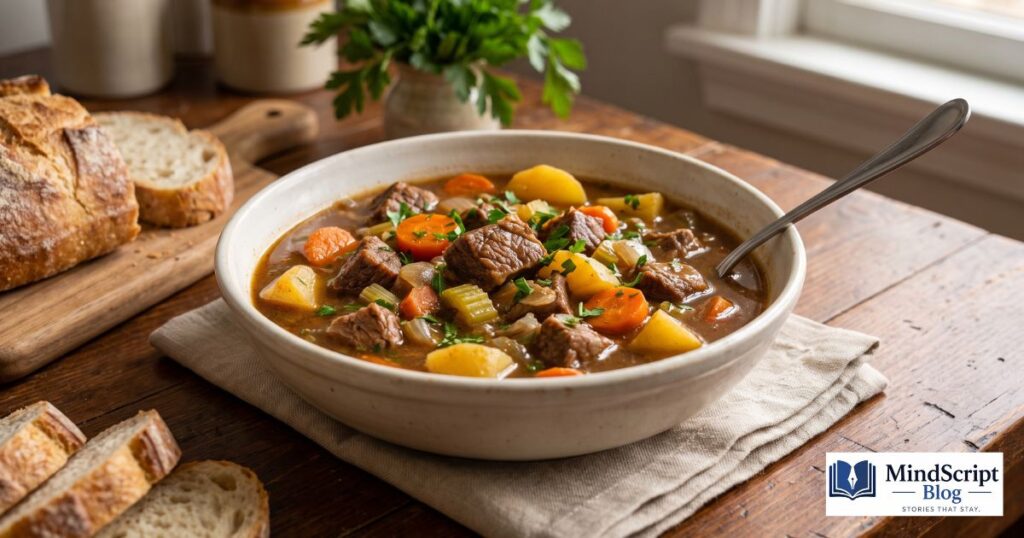
Dinty Moore beef stew is a well-known canned-style comfort food made with beef and vegetables in a savory gravy. Its familiar profile includes beef stew meat, potatoes, carrots, and a rich sauce. Many people enjoy it because it offers a quick and convenient meal.
This homemade recipe takes inspiration from that comforting style. However, it uses fresh ingredients and traditional cooking techniques. The goal is to create a homemade version with tender beef chunks, a flavorful broth, and a satisfying texture. Think of it as the slow-cooked cousin of a convenient pantry classic.
Dinty Moore Beef Stew Ingredients You’ll Need

Good ingredients build the foundation of great stew. For the homemade Dinty Moore beef stew recipe, I recommend beef chuck roast because it contains enough connective tissue and fat to become tender during slow cooking. You can also use pre-cut stew beef when convenience matters.
The following table gives you a practical starting point. You can adjust quantities slightly based on your preferred serving size.
| Ingredient | Suggested Amount | Purpose |
| Beef chuck roast or stew beef | 2 lb | Main protein |
| Potatoes | 1½ lb | Adds body and texture |
| Carrots | 3–4 medium | Adds sweetness |
| Yellow onions | 1 large | Builds flavor |
| Garlic | 3 cloves | Adds aroma |
| Beef broth | 4 cups | Creates the cooking liquid |
| Tomato paste | 2 tbsp | Adds depth |
| Worcestershire sauce | 1 tbsp | Adds savory flavor |
| All-purpose flour | ¼ cup | Helps thicken the stew |
| Dried thyme | 1 tsp | Adds herbal notes |
| Bay leaves | 2 | Adds subtle aroma |
| Salt and black pepper | To taste | Balances flavor |
| Cooking oil | 2 tbsp | Used for browning |
For the vegetables, russet potatoes create a softer texture while Yukon Gold potatoes hold their shape better. Use fresh carrots, yellow onion, and minced garlic for the best everyday flavor. You can also add beef bouillon, tomato sauce, or extra Worcestershire sauce when you want more depth.
Equipment Needed to Make Beef Stew
A heavy pot makes the cooking process easier. A large Dutch oven works especially well because it distributes heat evenly and holds a steady simmer. It also gives you enough room to brown the meat without overcrowding.
You will also need a sharp knife, cutting board, wooden spoon, measuring cups, and a ladle. If you prefer other beef stew cooking methods, a slow cooker or electric pressure cooker can also work. However, the pot remains the simplest choice for beginners.
How to Make Dinty Moore Beef Stew Step by Step
The secret to how to make Dinty Moore beef stew at home is simple. Build flavor in layers. Start with properly seasoned meat. Then brown it well before adding your vegetables and liquid. This small step makes a surprisingly big difference.
For the best results, follow these beef stew cooking instructions carefully. The step-by-step beef stew recipe below uses a Dutch oven or heavy pot. Your cooking time may vary depending on the size of your beef pieces and the heat level.
Step 1: Prepare the Beef
Cut the beef into roughly 1½-inch pieces. Pat the meat dry with paper towels. Season it generously with salt and black pepper. If you’re using chuck beef, trim away only excessive pieces of fat.
Dry meat browns better than wet meat. Therefore, this simple preparation step helps create a deeper crust. It also supports better homemade beef stew preparation from the very beginning.
Step 2: Brown the Beef for Maximum Flavor
Heat the oil in your pot over medium-high heat. Add the beef in small batches. Avoid filling the pot too much at once. Cook each piece until it develops a deep brown surface.
This process is known as browning beef for stew. It creates flavorful browned bits on the bottom of the pot. Those bits later dissolve into the liquid and help create a rich and savory flavor.
Step 3: Sauté the Aromatics
Remove the browned beef and lower the heat slightly. Add the onions and cook until they soften. Next, add the garlic and cook briefly. Don’t let the garlic burn because it can turn bitter.
This stage is all about sautéing vegetables and building a flavorful base. Stir in the tomato paste and cook it for about one minute. That short cooking time helps deepen its taste.
Step 4: Add the Broth and Seasonings
Return the beef to the pot. Pour in the beef broth and scrape the bottom with a wooden spoon. Add the Worcestershire sauce, dried thyme, and bay leaves.
You can use beef stock instead of broth if you prefer. A spoonful of beef bouillon can also intensify the flavor. However, check the salt level before adding more seasoning.
Step 5: Simmer the Beef Until Tender
Bring the liquid to a gentle simmer. Then reduce the heat and cover the pot. Let the beef cook slowly until it becomes tender.
The exact beef stew simmering time depends on your meat. Usually, about 1½ to 2 hours works well for chuck roast pieces. The best way to cook beef stew is patiently. Keep the heat low and let the connective tissue soften naturally.
Step 6: Add Potatoes and Carrots
Add the potatoes and carrots when the beef has started becoming tender. Adding them too early can leave you with mushy vegetables. Keep cooking until the vegetables become fork-tender.
This timing creates the ideal balance between tender vegetables and soft, flavorful beef. If you’re making easy beef stew with potatoes and carrots, this step deserves special attention.
Step 7: Thicken and Finish the Stew
If you want a thicker sauce, mix flour with cool water to make a flour slurry. Alternatively, combine cornstarch with cold water to create a cornstarch slurry. Stir your chosen mixture into the simmering stew gradually.
This is the basic answer to how to thicken beef stew and how to make beef stew gravy. Simmer for several minutes after adding the thickener. Finally, remove the bay leaves and taste the stew before serving.
Dinty Moore Beef Stew Recipe: Quick Recipe Overview
| Recipe Detail | Information |
| Prep Time | About 25 minutes |
| Cook Time | About 2 hours |
| Total Time | About 2 hours 25 minutes |
| Servings | 6 |
| Cooking Style | One-pot |
| Difficulty | Easy to moderate |
| Best Beef | Chuck roast or stew beef |
| Main Vegetables | Potatoes and carrots |
Best Cooking Methods for Dinty Moore Beef Stew
There isn’t only one best way to cook beef stew. Your choice depends on your schedule and equipment. The stovetop gives you excellent control. A slow cooker offers convenience. An oven creates steady, gentle heat. An Instant Pot reduces the cooking time.
The key is maintaining the right beef stew temperature for your chosen method. You want the meat to cook gently rather than aggressively. Regardless of the method, your goal remains the same: slow-cooked beef, flavorful liquid, and tender vegetables.
Stovetop Method
The stovetop method is ideal when you want maximum control. Brown the beef in a heavy pot. Add your liquid and seasonings. Then simmer until tender before adding the vegetables.
This classic stovetop beef stew method usually takes around two hours. Keep the heat low enough to maintain a gentle simmer. Stir occasionally and check the liquid level during cooking.
Slow Cooker Method
A slow cooker beef stew is perfect for busy days. Brown the beef first for better flavor. Then transfer it to your slow cooker with the remaining ingredients.
For a slow cooker Dinty Moore beef stew, cook on low until the beef becomes tender. Add delicate vegetables later when possible. This helps prevent them from becoming overly soft.
Oven Method
An oven-baked beef stew provides steady heat from all directions. A heavy Dutch oven works beautifully here. Brown the beef on the stovetop first. Then add the liquid and cover the pot.
The oven method is excellent for a long, gentle braise. Keep the temperature moderate and check the stew periodically. The meat should become fork-tender without drying out.
Instant Pot Method
An Instant Pot beef stew can save considerable time. Brown the beef using the sauté function first. Then add the broth, seasonings, and other ingredients according to your appliance’s instructions.
The Instant Pot method is useful when you want the flavor of a long-cooked stew in less time. Always follow your pressure cooker’s safety instructions and allow pressure to release as directed.
Cooking Method Comparison
| Method | Approximate Cooking Time | Best For |
| Stovetop | 1½–2½ hours | Traditional cooking |
| Slow Cooker | 6–8 hours on low | Busy schedules |
| Oven | 2–3 hours | Gentle braising |
| Instant Pot | Around 45–60 minutes plus pressure time | Faster preparation |
Expert Tips, Variations, and Serving Ideas
Great stew depends on small details. One of the most important tips for tender beef is choosing the right cut. Chuck roast works well because slow cooking breaks down its connective tissue. Avoid rushing the process if you want truly tender stew meat.
Another useful trick involves seasoning. Add flavor gradually rather than dumping everything in at once. These seasoning tips help you add more flavor without making the stew overly salty. Taste near the end and adjust carefully.
How to Make Beef Stew Thicker
If your stew seems thin, don’t panic. You can make beef stew thicker by simmering it uncovered. This reduces excess liquid naturally and concentrates the flavor.
For faster thickening beef stew, use a cornstarch slurry or flour slurry. Add a little at a time. Too much thickener can make the gravy pasty rather than silky.
Easy Ingredient Variations
You can make several beef stew substitutions without changing the dish completely. Add mushrooms, celery, peas, or pearl onions. You can also try different potatoes and fresh herbs.
For vegetable variations, consider adding green beans or parsnips. If you want a vegetable beef stew, simply increase the vegetable quantity. These ingredient substitutions make the recipe easier to adapt to your pantry.
Dietary Variations
For a gluten-free beef stew, use a certified gluten-free thickener and check packaged ingredients carefully. A naturally reduced broth can also thicken without flour.
A dairy-free beef stew is easy because the basic recipe contains no dairy. For a low-sodium beef stew, choose low-sodium broth and reduce added salt. You can also create a spicy beef stew with chili flakes or smoked paprika.
Make-Ahead Beef Stew
A make-ahead beef stew can be a smart option for busy families. Prepare it one day ahead and refrigerate it promptly. The flavors often become more integrated after resting.
When serving later, reheat it gently. If the gravy becomes too thick, add a small splash of broth. This is also a convenient approach for meal prep beef stew.
What to Serve With Dinty Moore Beef Stew
Wondering what to serve with beef stew? Start with something that can soak up the gravy. Crusty bread, dinner rolls, and garlic bread are classic choices. They turn every last spoonful of sauce into something worth enjoying.
For a more substantial meal, try mashed potatoes, rice, or egg noodles. On the lighter side, choose steamed vegetables, a green salad, or roasted vegetables. Cornbread also pairs wonderfully with a warm bowl of stew.
Best Side Dish Ideas
| Side Dish | Why It Works |
| Crusty bread | Perfect for soaking up gravy |
| Dinner rolls | Soft and family-friendly |
| Garlic bread | Adds extra savory flavor |
| Mashed potatoes | Creates an extra-comforting meal |
| Rice | Absorbs the flavorful broth |
| Egg noodles | Makes the meal more filling |
| Steamed vegetables | Adds a lighter element |
| Green salad | Brings freshness and crunch |
| Roasted vegetables | Adds caramelized flavor |
| Cornbread | Great for a cozy comfort food dinner |
How to Store, Freeze, and Reheat Beef Stew
Knowing how to store beef stew helps you enjoy leftovers safely. Transfer leftovers into a shallow airtight container and refrigerate them promptly. Don’t leave cooked stew sitting at room temperature for extended periods.
For beef stew refrigerator storage, keep your refrigerator at 40°F or below. According to USDA guidance, most cooked leftovers should be refrigerated within two hours and used within three to four days. If you won’t eat the leftovers in that window, freezing is a better choice.
Can You Freeze Beef Stew?
Yes, you can freeze beef stew. Allow it to cool appropriately before transferring it into a freezer-safe container. Leave some space because liquids expand when frozen.
For freezing homemade beef stew, portioning it into individual containers makes future meals easier. Label each container with the date. This approach works especially well for leftover beef stew and meal planning.
How to Thaw and Reheat Beef Stew
The safest approach for thaw frozen beef stew is to place it in the refrigerator. Once thawed, reheat it thoroughly. You can reheat on stovetop over medium-low heat while stirring occasionally.
For microwave beef stew, use a microwave-safe container and cover it loosely. Heat in short intervals and stir between each interval. Add a splash of broth if the sauce has become too thick.
Storage Guide
| Storage Method | Recommended Time |
| Refrigerator | 3–4 days |
| Freezer | Best quality within a few months |
| Reheating | Heat thoroughly before serving |
| Container | Airtight and freezer-safe for freezing |
Dinty Moore Beef Stew Nutrition Information and Health Benefits
The exact beef stew nutrition depends on your ingredients and serving size. A recipe made with leaner beef and plenty of vegetables will have a different nutritional profile from one made with fatty meat and extra flour.
Beef provides protein and several vitamins and minerals, including iron and vitamin B12. Potatoes provide carbohydrates while carrots contribute fiber and micronutrients. Together, these ingredients can create a satisfying protein-rich meal when served in a sensible portion.
Estimated Nutrition Per Serving
The following figures are general estimates. Your actual beef stew calories and protein per serving will depend on ingredients, brands, and portion size.
| Nutrition | Estimated Amount |
| Calories | 400–550 |
| Protein | 30–40 g |
| Total Fat | 15–25 g |
| Carbohydrates | 35–50 g |
| Fiber | 5–8 g |
| Sodium | Varies widely |
| Serving Size | About 1½ cups |
This can be a balanced meal when you include a good mix of protein and vegetables. However, the nutritional value changes significantly with the cut of beef and amount of sodium used. For a more healthy beef stew, choose leaner meat and plenty of vegetables.
Because beef can provide iron, this dish can also contribute to an overall diet that includes iron-rich foods. Still, no single recipe provides every nutrient your body needs. Think of this as one enjoyable part of a varied diet.
Frequently Asked Questions About Dinty Moore Beef Stew
Homemade Beef Stew FAQ
From choosing the right beef to storing, freezing, reheating, and serving a hearty bowl of homemade stew.
KITCHEN
Can I Make Dinty Moore-Style Beef Stew Without a Dutch Oven?
Yes. A heavy stockpot works well for homemade Dinty Moore beef stew preparation. You can also use a slow cooker or pressure cooker. The most important factor is maintaining gentle heat while the beef becomes tender.
What Is the Best Cut of Beef for Homemade Beef Stew?
Beef stew meat and chuck roast are popular choices. Chuck contains connective tissue that softens during slow cooking. When prepared correctly, it produces juicy, tender pieces with excellent flavor.
How Do I Make Beef Stew Meat Tender?
The answer to how to make tender beef stew is patience. Use a suitable cut, brown it first, and cook it gently. Give the connective tissue enough time to break down naturally.
How Long Can Beef Stew Stay in the Fridge?
If stored properly, cooked beef stew generally lasts three to four days in the refrigerator. This answers the common question, how long can beef stew stay in the fridge. Refrigerate leftovers promptly and keep the refrigerator at 40°F or below.
Can You Freeze Homemade Beef Stew?
Yes, can you freeze homemade beef stew is a common question with a simple answer. Properly cooled stew freezes well. Store it in a suitable container and thaw it safely in the refrigerator before reheating.
What Goes Well With Beef Stew?
If you’re wondering what goes well with beef stew, try crusty bread, dinner rolls, cornbread, rice, or mashed potatoes. A fresh green salad or steamed vegetables can also balance the rich gravy.
What Is the Best Way to Reheat Beef Stew?
The best way to reheat beef stew is slowly on the stovetop. Stir occasionally and add a small amount of broth if needed. Microwave reheating also works when you use short intervals and stir between them.
Final Thoughts on This Dinty Moore Beef Stew Recipe
This best Dinty Moore beef stew recipe brings the warmth of classic comfort food into your own kitchen. With good beef, simple vegetables, and a flavorful gravy, you can create a satisfying dinner without complicated ingredients.